Lisbon Metro: Blue Line (Linha Azul)
Lisbon Metro: Linha Azul


The Linha Azul (Blue Line) is one of the four lines of the Lisbon metro (Metropolitano de Lisboa).
The others lines are the Linha Amarela (Yellow Line), Linha Verde (Green Line), Linha Vermelha (Red Line).
The Blue Line runs 13.7 km from Santa Apolónia in Alfama near the River Tagus to the northern terminus of Reboleira. Some of the stations on the line date from the first opening of the metro in 1959.

Stations on the Blue Line
There are 18 stations on the line which is completely underground.
Santa Apolónia
Santa Apolonia connects to the mainline Azambuja Line. Local services run to Gare do Oriente Station on the Azambuja Line for the Parque Das Nações.
There are also trains from here to Evora and other destinations including Braga, Coimbra, Porto, Guimarães and Fatima. Express trains to Porto depart from Santa Apolónia Station calling at Gare do Oriente.
Nearby attractions are the Museu Militar and the Museu Nacional do Azulejo.

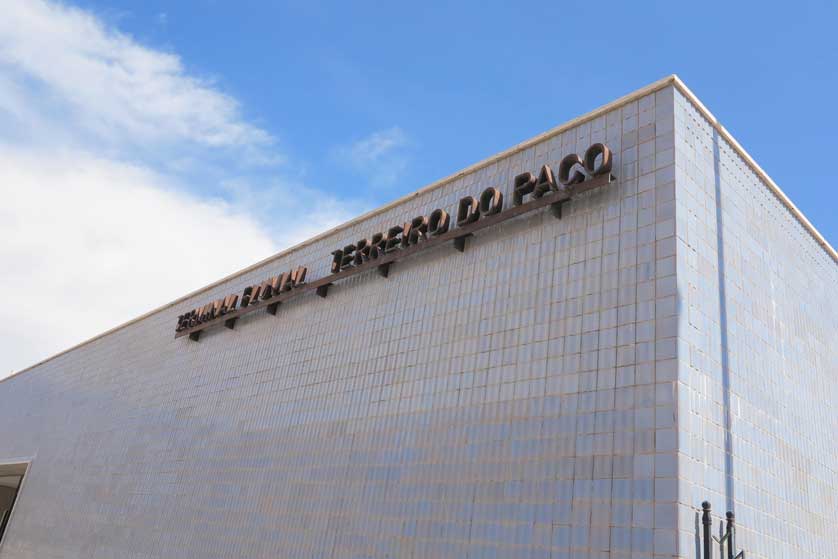
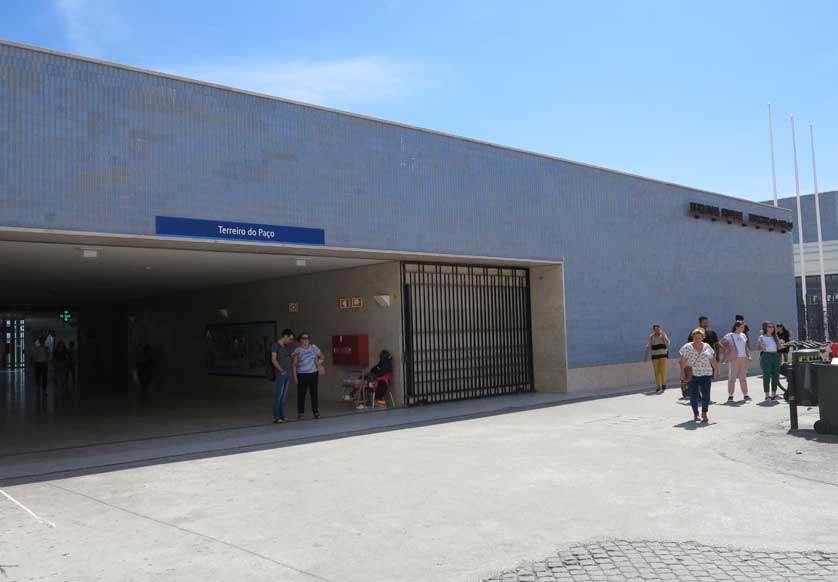
Terreiro do Paço
Terreiro do Paço Station connects with the Transtejo & Soflusa ferry port with ferries across the River Tagus to Barreiro. The station is within easy walking distance of Praça do Comércio and the Arco da Rua Augusta.
Baixa-Chiado
Baixa-Chiado Station is the intersection station with the Linha Verde (Green Line). Being right in the downtown centre of Lisbon, there is a lot to see in Baixa-Chiado. Close to the metro station are a number of Lisbon attractions: Convento do Carmo, Igreja da Nossa Senhora da Encarnação, Cervejaria Trindade and Cafe A Brasileira.
Restauradores
Restauradores Station in central Lisbon is located on Praça dos Restauradores. The Monument to the Restorers (Monumento aos Restauradores) is located in the middle of Praça dos Restauradores.
The station is also close to Rossio Station which is a major transport hub for the Lisbon city bus, subway, taxi, and tram network.
Avenida
Avenida Station is located on the Avenida da Liberdade, a ritzy boulevard in downtown Lisbon. A number of quality hotels are located nearby including the four star NH Collection Lisboa Liberdade, the five star Valverde Hotel and the Hotel Tivoli Avenida Liberdade Lisboa, also with five stars.
The Casa-Museu Medeiros e Almeida is also nearby.
Marquês de Pombal
Marquês de Pombal is the intersection of the blue and yellow lines. It is also a major hub for Lisbon buses. From the station and Praça do Marquês de Pombal it is is a short walk north to Parque Eduardo VII, Estufa Fria and the Carlos Lopes Pavilion. This area of Lisbon also has many hotels to choose from including the HF Fénix Lisboa, the HF Fénix Garden, the HF Fénix Music, the four star Hotel Florida, the three star Hotel Dom Carlos Park, the four star Turim Av Liberdade Hotel and the three star SANA Capitol Hotel.
Parque
Parque Station is on the east side of Parque Eduardo VII and is one of the capital's most exclusive areas. The station is famous for its azulejo tiles that reference the work of the writer Fernando Pessoa and others. Parque was one of the original 11 stations of the Lisbon metro that opened in 1959. Architect Francisco Keil do Amaral (1910-1975) designed the model for these stations, which was used for all subsequent stations built on the Lisbon metro until 1972.
São Sebastião
São Sebastião Station connects with the Red Line and has an entrance in the El Corte Ingles department store. It is close to the Museu Calouste Gulbenkian and the Igreja de São Sebastião da Pedreira.
Praça de Espanha
Praça de Espanha Station is close to the large Institute of Oncology Francisco Gentil (IPO) hospital and the Hotel Açores Lisboa.
Jardim Zoológico
Jardim Zoológico connects with Sete Rios train and bus station and as its name suggests is close to Lisbon's Zoo. Sete Rios Station in northern Lisbon is the main bus station for long-distance buses to destinations all over Portugal.
Many local Lisbon city buses also stop at Sete Rios. The AeroBus#2 to Lisbon Airport stops at Sete Rios and runs hourly. There are a number of other bus services to and from Sete Rios including the #202 and #758 to Cais do Sodre, the #755 to Poço Bispo, the #701 to Campo Grande, the #716 to Benfica, the #726 to Sapadores, the #731 to Moscavide Centro, the #746 to Marquês Pombal, the #754 to Campo Pequeno and the #768 to Cidade Universitária.
Laranjeiras
Laranjeiras Station is west of the University of Lisbon. Also nearby is the Ismaili Center in Lisbon, the Carlos Carvalho Arte Contemporânea gallery and the Centro Hospitalar Lisboa Norte.
Alto dos Moinhos
Alto dos Moinhos Station is close to the Museu Nacional da Música (National Museum of Music) and the Museum Benfica Cosme Damião within Luz Stadium.
Colégio de Militar/Luz
Colégio de Militar/Luz Station is convenient for the Estadio da Luz (the home of Benfica) and the Colombo shopping mall.
Carnide
Carnide Station is in a fairly commercial area of the city and is near a campus of the European University of Lisbon on Estrada da Correia.

Potinha
Potinha Station is within the Bairro Mário Madeira commercial and manufacturing district of the city.
Alfornelos
Alfornelos Station in the Amadora area serves a mixed residential and commercial area marked by large apartment blocks. Buses stopping at the station include the 128 Casal da Mira (Dolce Vita Tejo) to Colégio Militar, the 143 Amadora (Estação Norte) to Pontinha Station service and the 155 Amadora (Hospital) loop bus.
Amadora Este
Amadora Este Station also serves the mainly residential area of Amadora.
Reboleira
Reboleira Station on the metro connects with Reboleira Station on the mainline Sintra Line (Linha de Sintra) west to Sintra and the Azambuja Line to the suburb of Azambuja.
Via Viagem
A good way of getting around on the Lisbon metro is to purchase a Viva Viagem card. This is a rechargeable electronic card that can be used on Lisbon's metro, buses (except the AeroBus to and from Lisbon Airport), ferries, trams and urban trains to and from Sintra and Cascais. The Viva Viagem card costs 0.50 cents to first buy and is valid for one year from the date of purchase.