Faro City Walls (Muralhas de Faro)
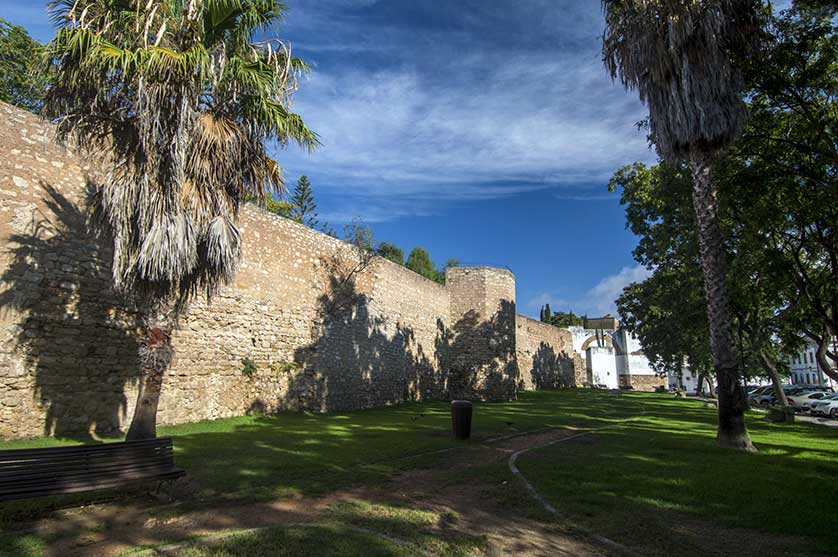
The City Walls (Muralhas de Faro) in Faro in the Algarve date from various ages including Roman, Byzantine, Moorish and Christian.
They are a visible reminder of the Faro's long history and strategic importance.
History
The city walls are as old as Faro itself. Known as Ossonoba during the Roman period of Portugal's history, the Romans built walls to protect their forum and other civic buildings. When the Roman Empire split in to western and eastern parts, the Byzantines (Eastern Roman Empire) built two octagonal towers to reinforce the original walls.
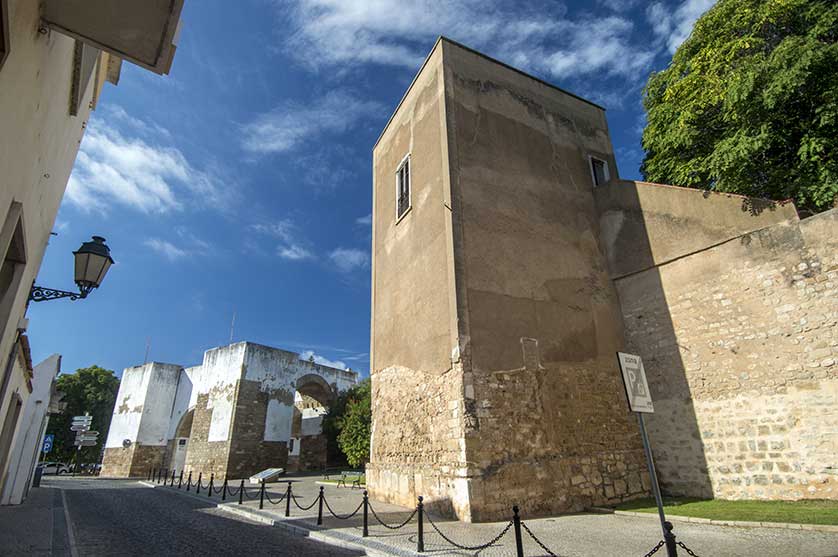
The arrival of Arab occupiers in the 8th century led to arched, defensive gates built into the walls for further protection.
These include the Arco do Repouso (Arch of Rest) and a horsehoe-shaped arch inside now preserved inside the Arco da Vila. The walls themselves were also generally repaired and strengthened.
After the Reconquest of the city in 1249 by King Afonso III, the walls were damaged in attacks by English raiders in the 16th century and again in the devastating Earthquake of 1755.
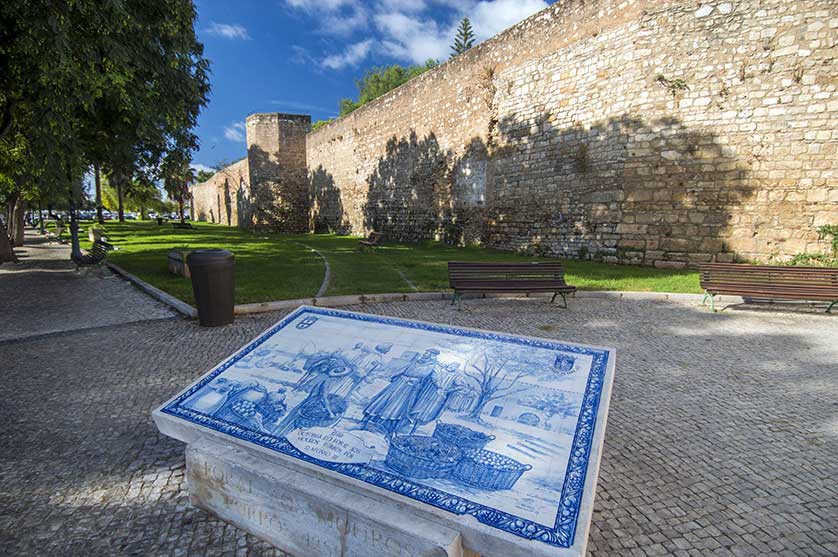
During the Portuguese Restoration War (Guerra da Restauração) from 1640 to 1668, the walls were remodeled to position artillery pieces on them.
Access
The walls in Faro surround the old town or Vila Adentro. Within this area are many of the town's main, historical attractions. These include Faro Cathedral, the Paço Episcopal de Faro (Bishop's Palace), the statue of Afonso III and the worthwhile Museu Municipal de Faro.
Hotels in the Algarve
Stay at the Hotel Hostellicious
Hotels in Albufeira - Agoda.com
Book Hotels in Algarve - Agoda.com
Find Hotels in Lagos - Agoda.com
Hotels in Portugal - Booking.com